
Periodontal disease is an infection of your gum tissue, usually caused by poor oral hygiene habits. If brushing and flossing is not done at least twice a day, and you’re not visiting your dentist for checkups and professional cleanings twice a year, plaque will build up on the teeth and eventually harden. This is the beginning stage of periodontal disease. Over time, advanced stages of periodontal disease can lead to sore and bleeding gums, discomfort with chewing, and tooth loss. At the advanced stages, regular dental cleanings will no longer help the infection.
Treatment Options for Periodontal Disease
Scaling and Root Planing
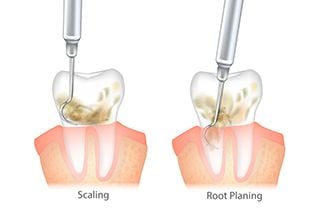 This procedure is a much deeper cleaning than the routine cleanings you would get twice a year. First, scaling is done to remove plaque and other residue from the surface of your teeth, to clear the way for a deeper clean. After applying a local anesthetic, your periodontist will perform root planing by cleaning out the plaque from below your gum line. Together, these methods have been effective in treating periodontal disease and allowing the gums and surrounding bone to heal.
Antibiotics/Antimicrobials
A simple oral prescription of antibiotics or antimicrobials may help treat periodontal disease. Sometimes they are combined with another non-surgical periodontal treatment to maximize treatment.
Medication under the Gum Line
After a dental scaling and root planing, your periodontist may recommend placing medication under your gum line to help kill any bacteria left behind after the procedure. This should only be done in combination with scaling and root planing, never on its own.
Bite Adjustment
If you notice that you have loose teeth, they will need to be protected from the biting and chewing forces that impact them, especially if you grind or clench your teeth as well. Small amounts of tooth enamel can be reshaped to change the way the upper and lower make contact, your teeth can be joined together with a metal or plastic brace to help support each other, or you can use a nightguard to cushion the pressure on your teeth when you grind or clench them.
Oral Hygiene
The best way to avoid periodontal disease is preventive care. Removing the debris and residue that cling to your teeth and gums will play a significant role in maintaining good oral health. A daily routine of brushing, flossing, and other oral hygiene products at home will ensure that periodontal disease is kept at bay.