Would you like to switch to the accessible version of this site?

Go to accessible site Close modal window

Don't need the accessible version of this site?

Hide the accessibility button Close modal window
Accessibility View Close toolbar
Southbury, CT Dentist | Gary J. Westerman, DMD

Gary J. Westerman, DMD

Southbury Dental Office

1063 Main Street N

Southbury, CT 06488

(203) 264-5630

Menu
  • Home
  • Dr. Gary Westerman
  • Staff
  • Dental Office
  • Dental Services
    • Laser Dentistry
    • Nitrous Oxide/Sedation Dentistry
    • Affordable Dental Care
  • New Patients
  • Contact Us
  • Patient Education
    • Educational Videos
    • Cosmetic & General Dentistry
    • Emergency Care
    • Endodontics
    • Implant Dentistry
    • Oral Health
    • Oral Hygiene
    • Oral Surgery
    • Orthodontics
    • Pediatric Dentistry
    • Periodontal Therapy
    • Technology
  • Our Blog
  • Welcome! >
  • Articles >
  • Orthodontics >
  • Orthodontic Retention

Orthodontic Retention

  • Created in Orthodontics

Getting your braces off is definitely a cause for celebration. You can finally enjoy your new smile after all that work and effort! But getting your braces off isn’t the end of treatment. Once your braces come off, you will enter the retention period of treatment.

During the retention period, you will be given a retainer to wear for at least 22 hours a day, for at least 24 months. After the retention period, you can wear your retainer less, going from nightly to only a few nights a week.

If you don’t wear your retainer, your teeth might revert to their former position, and you will lose the progress made. Teeth aren’t set in the jawbone, instead, they are held in place by a network of fibers called periodontal ligaments. After teeth have been moved, it takes several months for the periodontal ligament to support and adjust to new positions of the teeth. When you wear your retainer, you are supporting the periodontal ligaments and making sure that your teeth stay exactly where you want them.

In most cases, you will be fitted for a retainer right after your braces come off, and it will be made and prepared for you in office. There are three types of retainers:

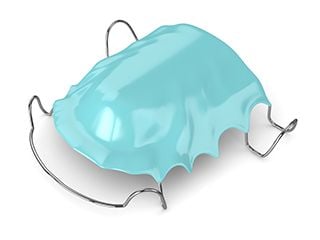
  • Hawley retainerhawley retainer

The most popular and durable type of retainer, the Hawley retainer is designed with a thin, tongue-shaped mold that holds a wire across your teeth to keep them in place.

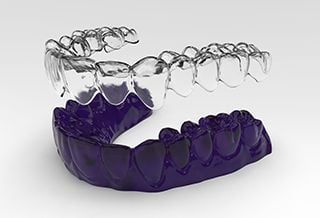
  • Clear plastic retainerclear retainer

These look and feel like clear aligners. They are made from plastic to fit exactly over your teeth and secure them.

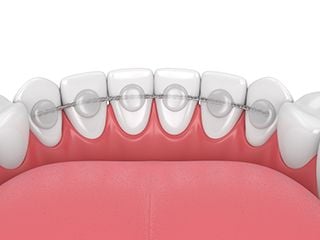
  • Fixed bonded retainerbonded retainer

A fixed bonded retainer is typically used on the front bottom teeth. A small wire is cemented to the tongue side of the teeth to keep them in place.

It’s important to clean your retainers. For Hawley retainers, you can brush them with a regular toothbrush. For clear plastic retainers, denture cleaner might be the best option. Fixed retainers have similar cleaning methods to braces, and you’ll likely need special tools to floss underneath the wire.

It’s also very important to carry your retainer case with you. So often, retainers are lost in a napkin and accidentally discarded. Retainers must also be kept away from very hot water, as that can warp them. With proper care, a retainer can help you keep your new smile.

  • Educational Videos
  • Cosmetic & General Dentistry
  • Emergency Care
  • Endodontics
  • Implant Dentistry
  • Oral Health
  • Oral Hygiene
  • Oral Surgery
  • Orthodontics
  • Pediatric Dentistry
  • Periodontal Therapy
  • Technology

Featured Services

Click to find out more

  • Crowns & Bridgework

    Crowns strengthen damaged teeth, allowing them to function normally again.
    Learn More
  • Cosmetic Dentistry

    The practice of dentistry encompasses an amazing array of services and procedures, all with a common goal: to help you to preserve your natural teeth as long as possible, ensure your oral health, and keep you looking and feeling great throughout life.
    Learn More
  • Laser Dentistry

    What are dentists currently using lasers for? These devices have been proven to help in the detection and treatment of oral diseases.
    Learn More

Make An Appointment!

Send Us an Email

Error!

    Hours of Operation

    Our Regular Schedule

    Monday:

    8:30 am-5:30 pm

    Tuesday:

    8:30 am-5:30 pm

    Wednesday:

    Closed

    Thursday:

    8:30 am-5:30 pm

    Friday:

    Closed

    Saturday:

    Closed

    Sunday:

    Closed

    Our Location

    Find us on the map

    • Copyright © 2026 MH Sub I, LLC dba Officite.
    • Admin Log In